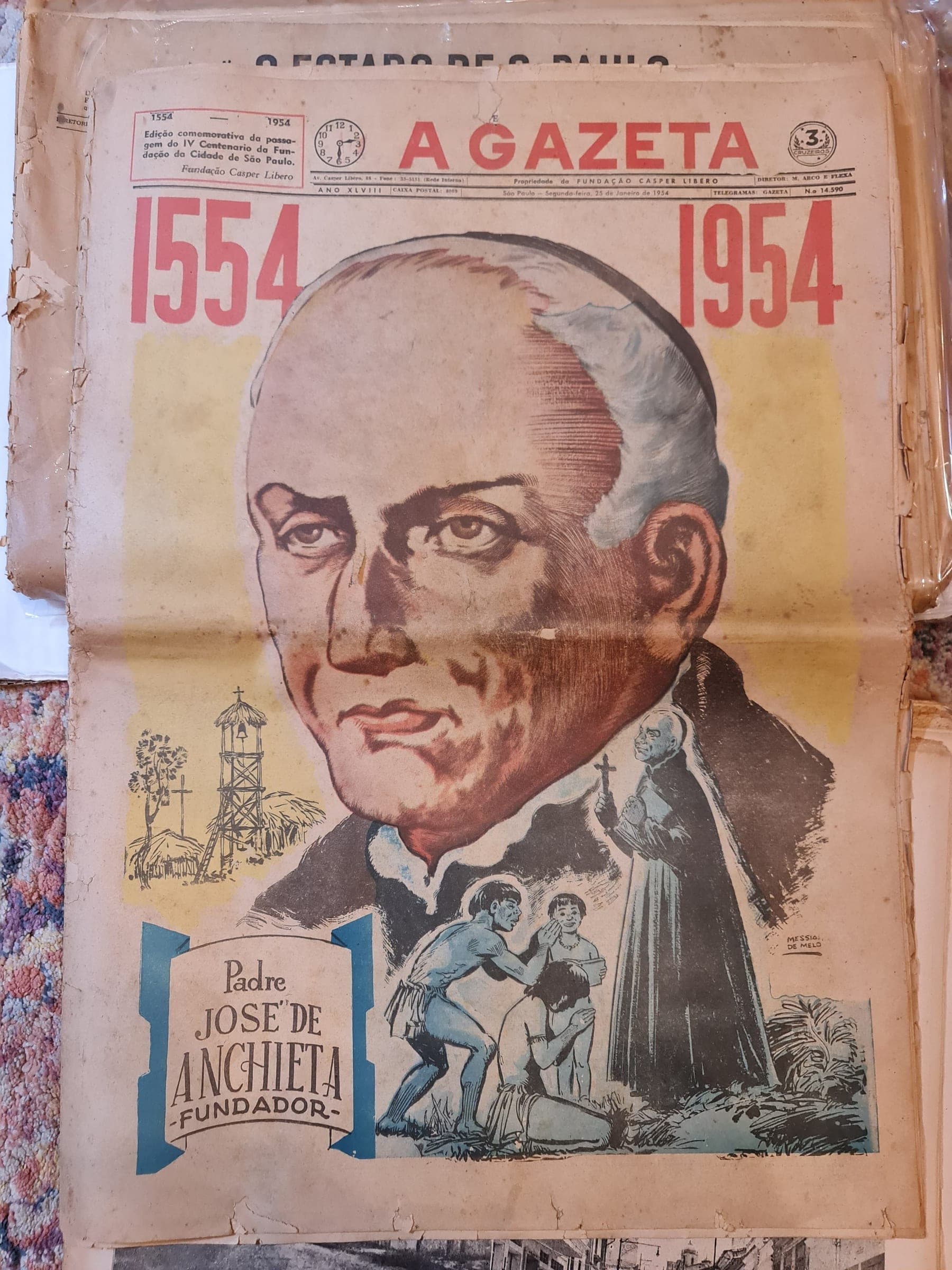
The symbols that marked the 1954 celebrations and live on in Sartoria San Paolo's Ready-to-Wear collection.
The Symbols of the IV Centenary
Montage with 1954 commemorative shields
The Shields of 1954
Three shields, one shared pride. Each brings together the symbols that defined the visual identity of the IV Centenary celebrations — architectural landmarks, founding figures, and the geometry Oscar Niemeyer designed for a city on the rise. These same elements have crossed seven decades and are present today in the SSP 1954 collection.
The References in the Shields
Each element present in the commemorative shields carries its own meaning — and a history that traces back to the city's founding. Discover the symbols that shaped the IV Centenary aesthetic and inspire the SSP 1954 collection.
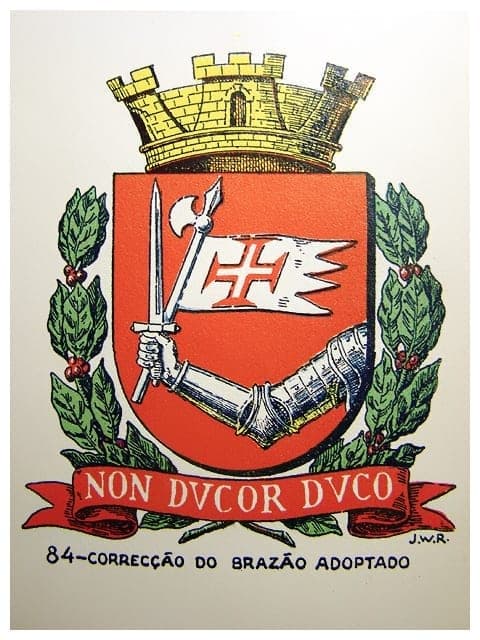
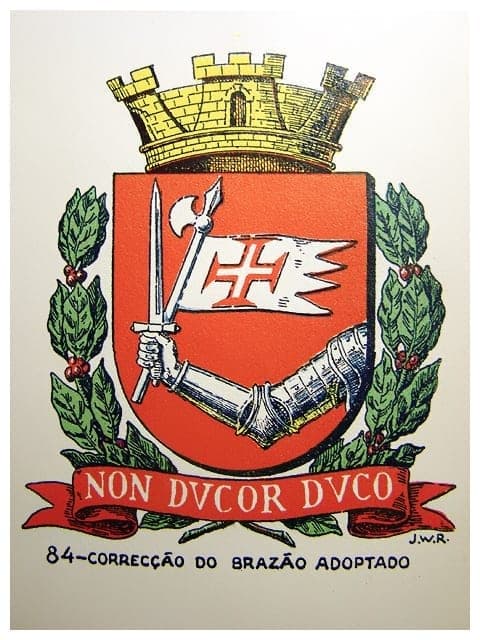
Coat of Arms of the State of São Paulo
The shield reproduces the oldest version of the state coat of arms, with the crown bearing only three towers — a detail that distinguishes this representation from later versions and appears in various 1954 commemorative materials.
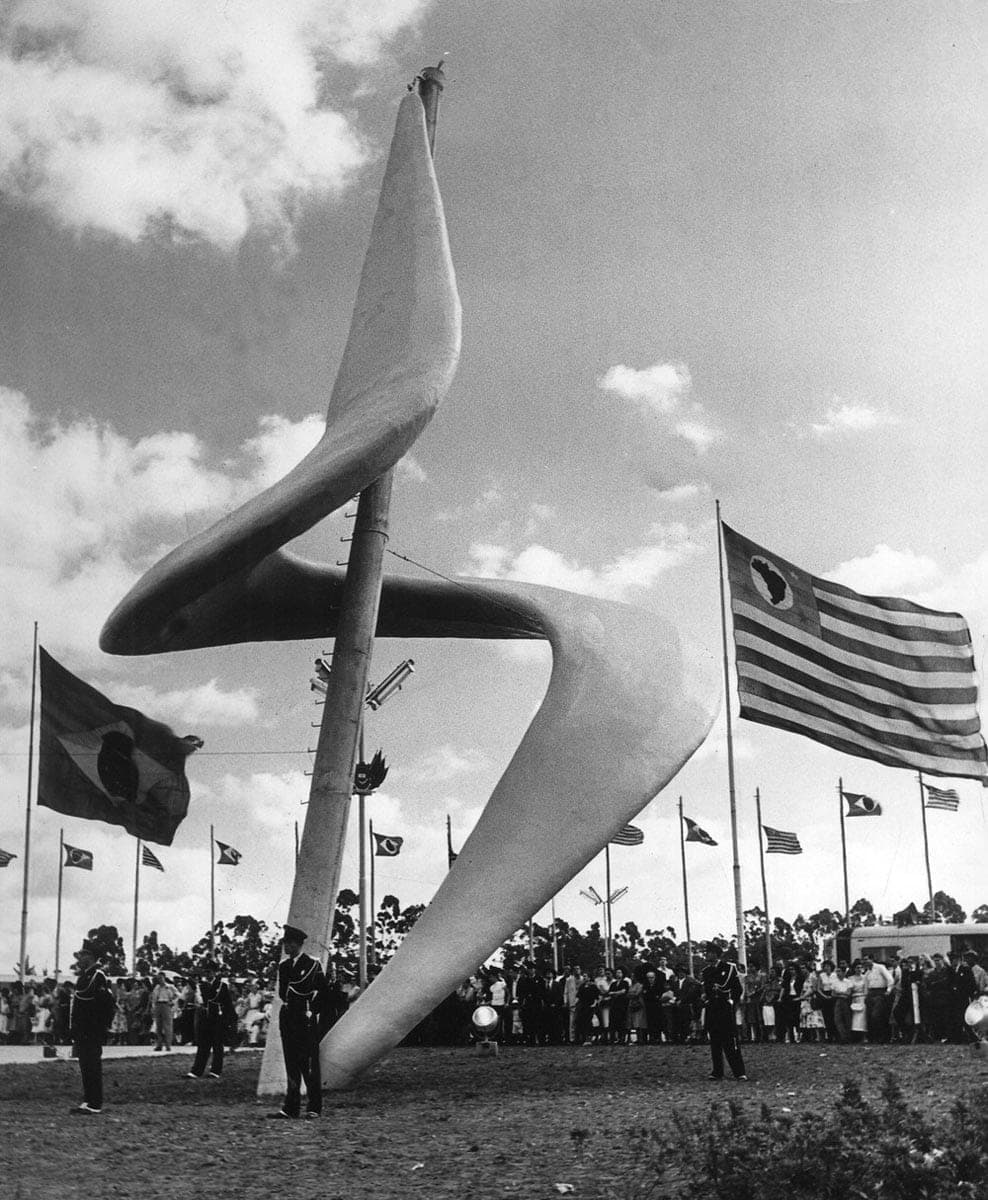
Ascending Volute
Conceived by Oscar Niemeyer for the inauguration of Parque do Ibirapuera, the Ascending Volute was a baseless spiral sculpture, approximately 17 meters tall. Its geometry contrasted with the horizontal paths of the canopy — an unusual form that translated, in concrete, São Paulo's vertiginous growth. The structure collapsed sometime after inauguration. What remained was the symbol: present in coins, pennants, and stamps — and the spirit of ascension that inspires the SSP 1954 collection.
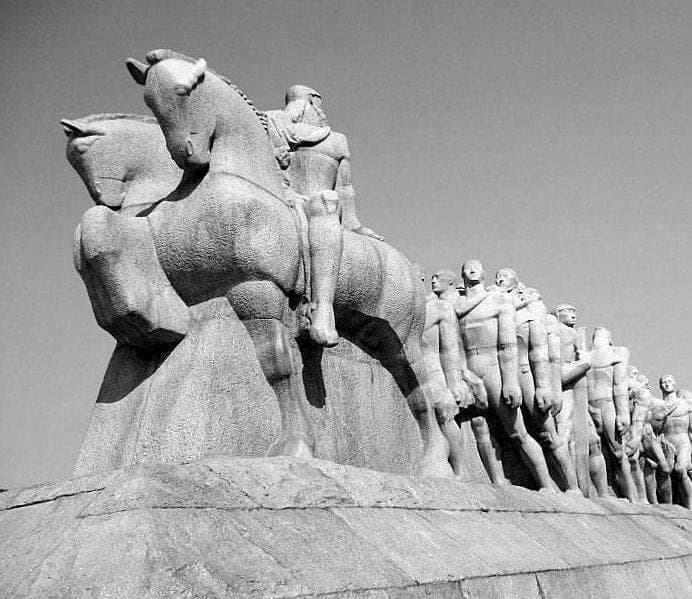
Monument to the Bandeiras
A tribute to the Bandeirantes who explored the hinterlands during the 17th and 18th centuries. Inaugurated on January 25, 1953, it anticipated the IV Centenary commemorations and became one of the most prominent visual landmarks in the graphic identity of the celebrations.
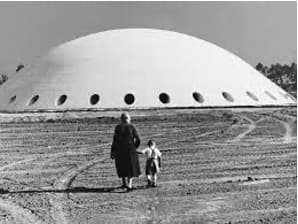
Parque do Ibirapuera
Inaugurated in 1954 as the city's gift to itself, Parque do Ibirapuera spans 158 hectares of protected land. Its pavilions, auditorium, and celebrated canopy were conceived by Oscar Niemeyer, with structural designs by Joaquim Cardozo. The gardens, designed by Otávio Augusto Teixeira Mendes, complete an ensemble that is both historical heritage and a living space of São Paulo's culture.
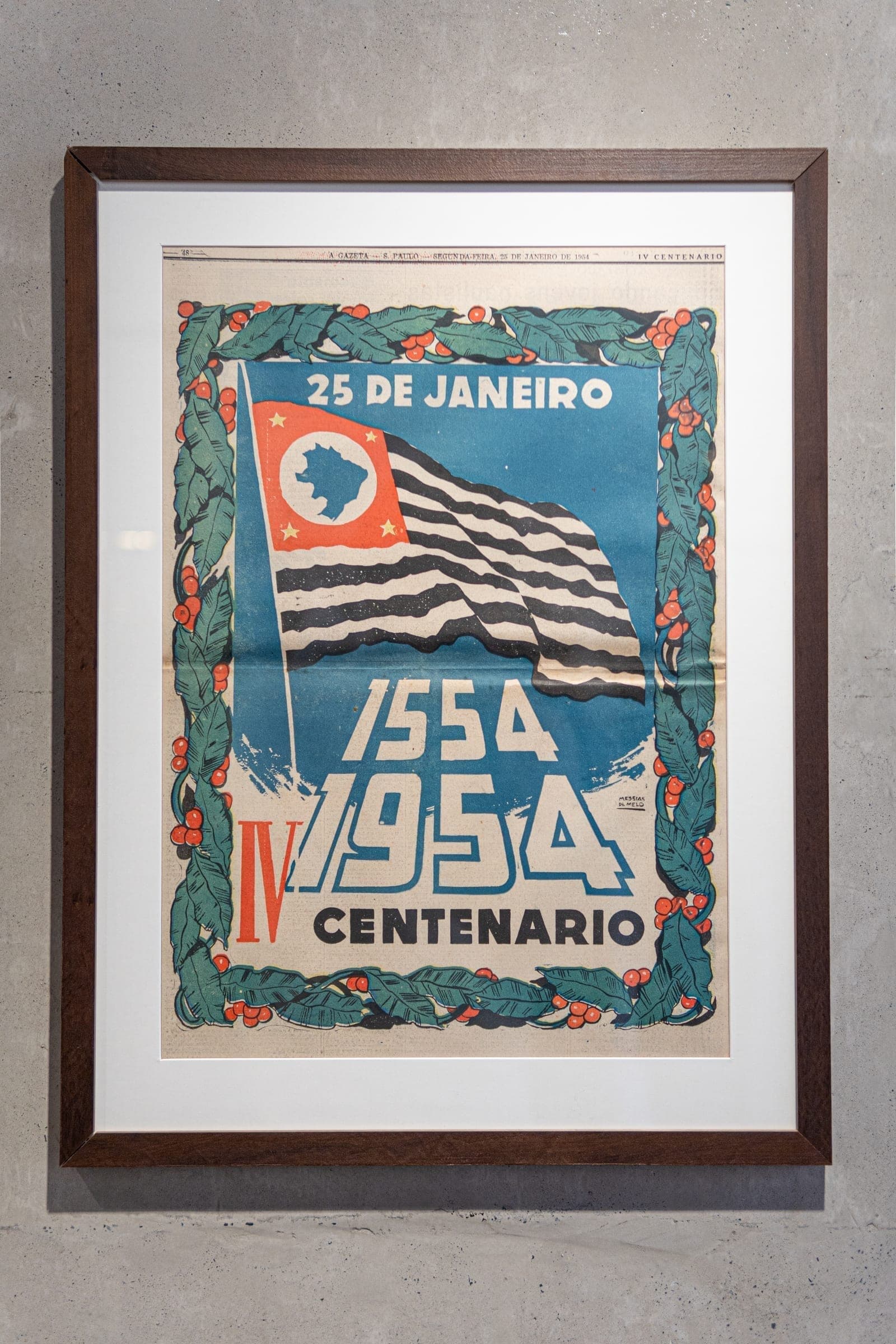
1554 — 1954
The juxtaposition of both years — foundation and celebration — became one of the most recurring graphic elements in the IV Centenary's visual identity. Present in pennants, stamps, coins, and publications, the pair of dates distills four hundred years of history into two numbers.
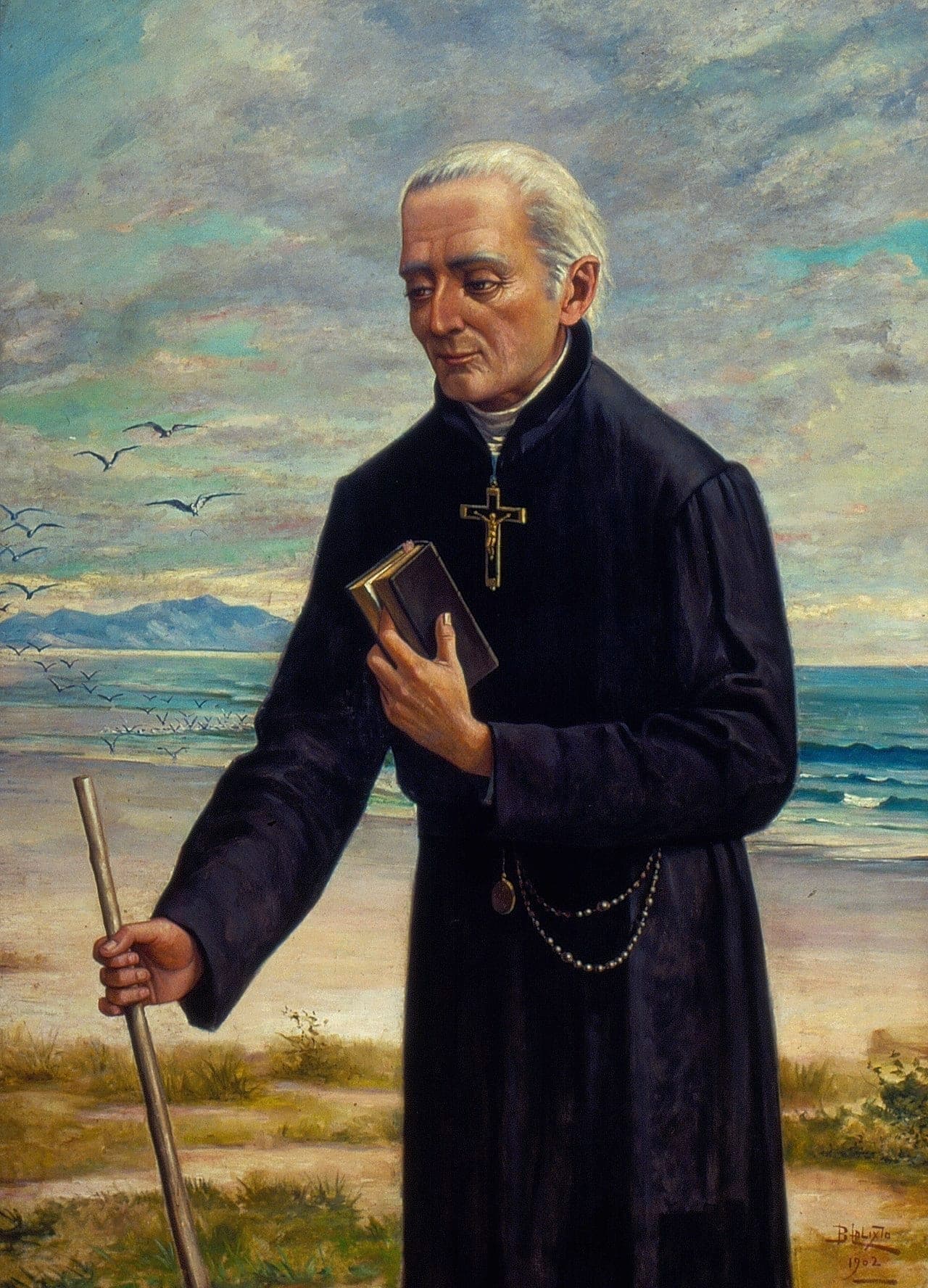
Father José de Anchieta
A central figure in the founding of São Paulo in 1554, the Spanish Jesuit José de Anchieta is a constant presence in the IV Centenary iconography. His image on the commemorative shields connects the 1954 celebration to the original moment of foundation — the gesture that set four hundred years of history in motion. In the image, the work by Benedito Calixto, 1902.

Altino Arantes Building
Inaugurated in 1947 to house the Bank of the State of São Paulo, the Altino Arantes Building was, for over a decade, the tallest construction in the city. With 35 floors and 161 meters, its Art Deco architecture inspired by the Empire State Building made it a symbol of São Paulo's vertical ambition — and a fixture in the IV Centenary iconography.
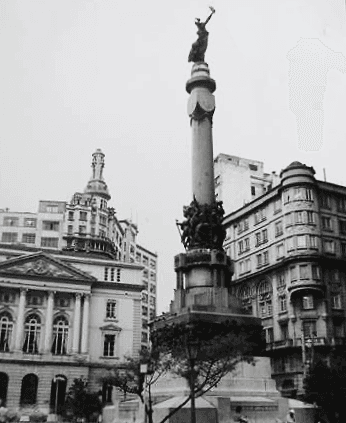
Immortal Glory to the Founders of São Paulo
A monument by Amedeo Zani, inaugurated in 1925 at Pátio do Colégio — the city's ground zero. The work reinforces the symbolism of the place where São Paulo was born, connecting the memory of its founders to the physical space that gave rise to everything. Its presence on the IV Centenary shields is a reverence to the founding.
These Symbols in the SSP 1954 Collection
The visual landmarks that defined the IV Centenary — the Volute, the coats of arms, the monuments, the dates — have crossed seven decades and found new life in the SSP 1954 collection. Sartoria San Paolo researched, collected, and translated this aesthetic into Ready-to-Wear pieces that honor the city's history without resorting to nostalgia: tradition as raw material, not longing.