Mariano Rubinacci — The Man Who Dressed Naples for the World
A tribute to the legacy of Mariano Rubinacci — the man who transformed an atelier on Via Chiaia into a worldwide synonym for Neapolitan effortless elegance.
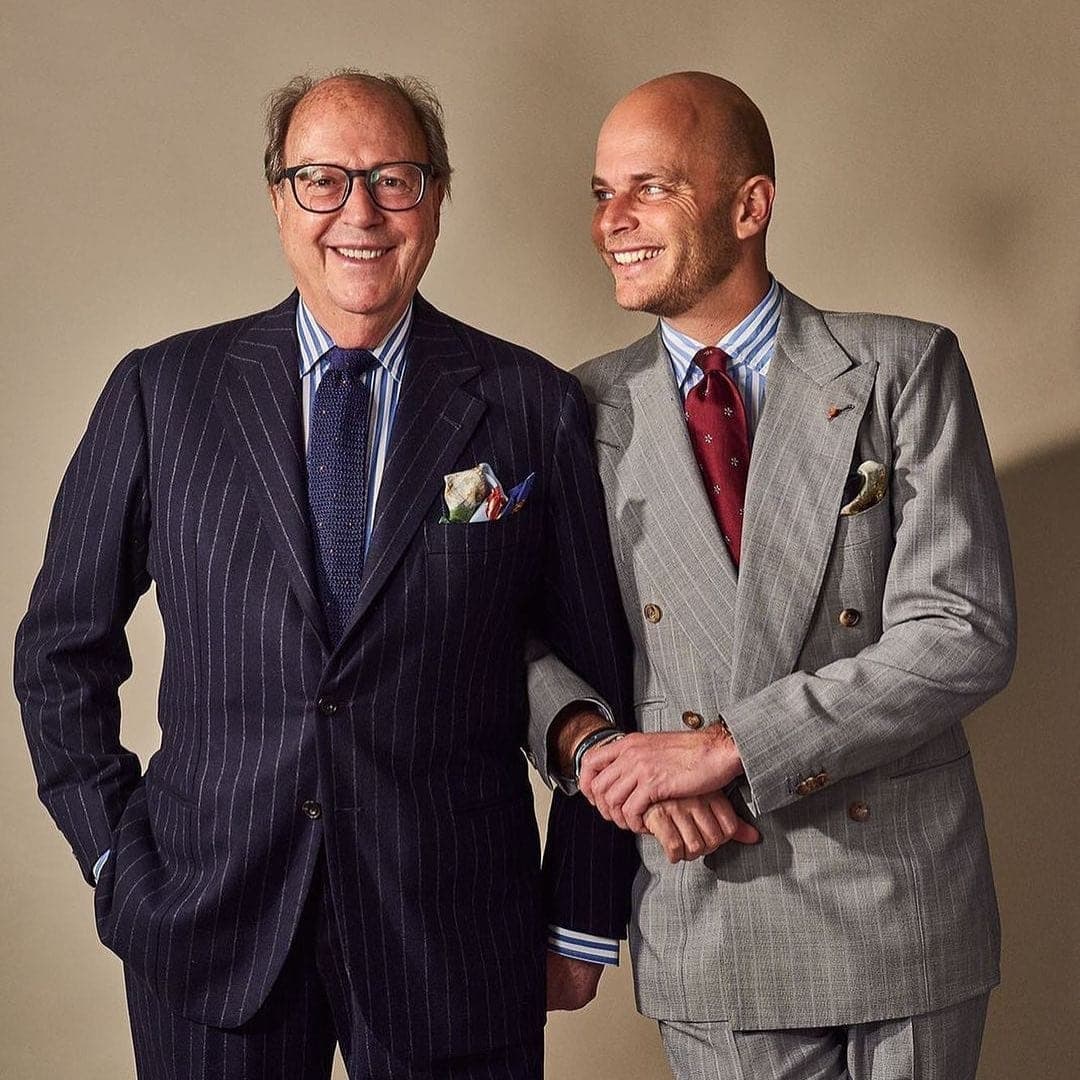
There are men who make clothes. And there are men who transform clothes into language — into a way of telling the world who one is without pronouncing a single word. Mariano Rubinacci, who died on 18 February 2026 at the age of 83, belonged to the second category. With him departs not merely a tailor, but an interpreter — someone who translated temperament into cloth with the fluency of one who composes in wool and silk.
A name born before the man
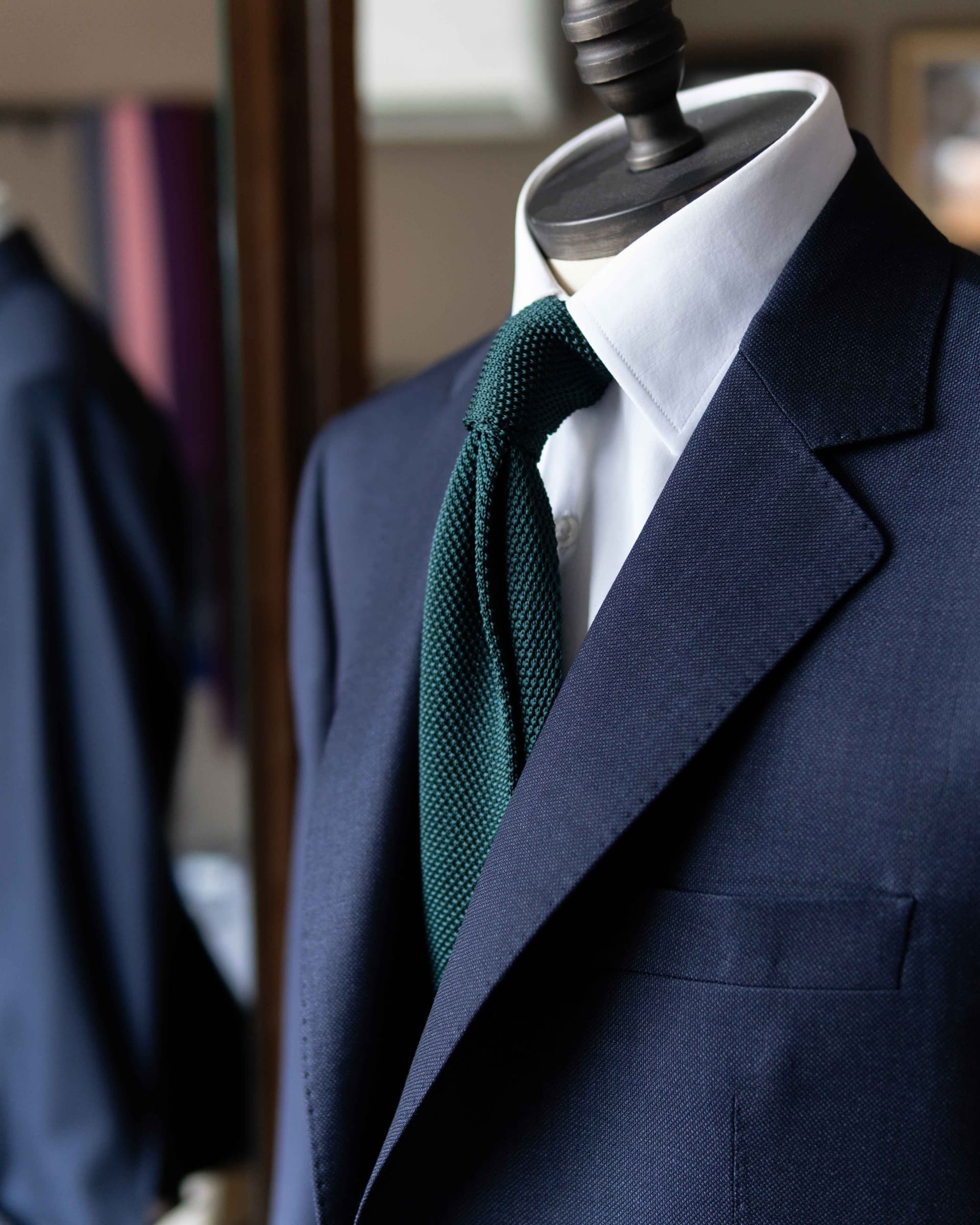
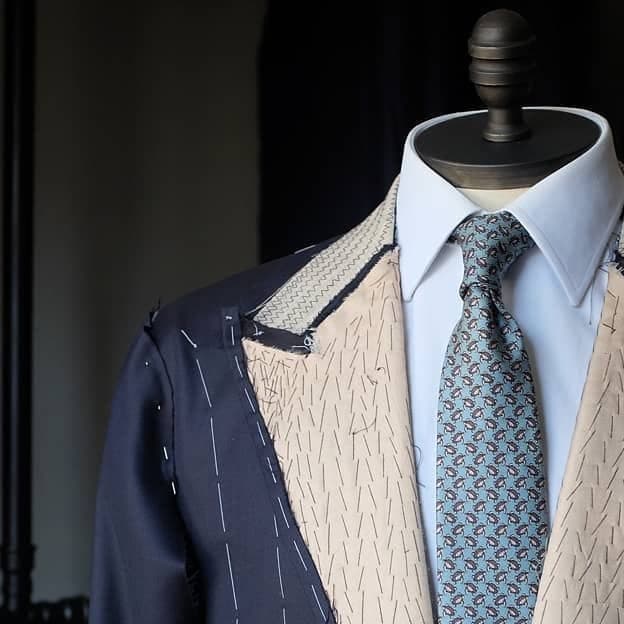
The story of Mariano Rubinacci does not begin with him. It begins with his father, Gennaro — known to everyone as "Bebè" — an art collector, cavalry officer and Neapolitan dandy who, in 1932, opened an atelier in the heart of the Chiaia neighbourhood of Naples. He called it London House, in homage to the British elegance he admired. But what he created there was the opposite of what was done in Savile Row: light jackets, without lining, without padding, which could be folded up to eight times. The giacca napoletana was born there, with its mappina sleeve, its barchetta breast pocket and a lightness that seemed to defy gravity.
Gennaro was not a trained tailor. He was a man of taste so refined that friends from the Neapolitan nobility asked him to accompany them to fittings — and, inevitably, to guide their choices. His clients included the last king of Italy, Umberto II di Savoia, the filmmaker Vittorio De Sica, and the writer Curzio Malaparte. London House was less a workshop than a salon — a place where cloth, conversation and culture met.
It was in this environment that Mariano grew up. At thirteen or fourteen, he was already selling ties in his father's atelier. Each one cost a thousand lire — a fortune, as he himself liked to recall with the discreet smile of one who measures the value of things not by price, but by gesture.
The young man who inherited a legacy and transformed it into a world
In 1961, Gennaro died. Mariano was eighteen. He inherited not merely a business, but a philosophy: that clothes exist to serve the body, and not the reverse. That true elegance is the absence of visible effort — what the Italians call sprezzatura.
Two years later, he renamed the company Rubinacci. The gesture was simultaneously a tribute and a declaration of independence. Under his direction, the atelier maintained its Neapolitan soul but gained international reach. In 1974, it opened in Milan, on the Via Montenapoleone. Decades later, it arrived in Tokyo, New York and Singapore. But it was the opening of the shop in London — at number 96 Mount Street in Mayfair — that carried the deepest symbolism.
Fifty years after Gennaro had named his atelier in homage to the British capital, his son was opening a door in London itself. To secure the space, Mariano turned to Lord Rothschild, his client and friend. The circle closed.
The perfect imperfection
Those who visited Mariano at the Palazzo Cellamare on the Via Chiaia found a man who received everyone with the same warm greeting: "Ciao, ragazzi." It did not matter whether the visitor was a Neapolitan prince or a young man placing his first bespoke order. Hospitality was part of the method.
Mariano had a philosophy he repeated frequently, one that defines — perhaps better than any technical description — the spirit of the house: the perfect imperfection. Once, pointing to a vase of flowers in the atelier, he said the flowers might be dry, but they were not false. It was his way of explaining what sprezzatura means in practice — not a cultivated defect, but a naturalness that cannot be manufactured.
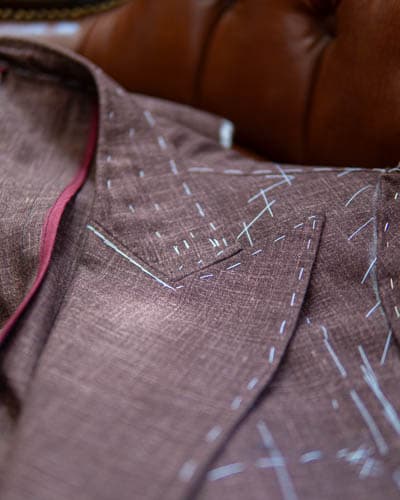
This philosophy materialised in every piece that left the atelier. The slightly gathered sleeve at the shoulder — the mappina —, the breast pocket shaped like a little boat — the barchetta —, the patch pocket rounded like a cognac glass — the pignata. Details that are not decorative but structural. That reveal the hand of the artisan in every centimetre.
The guardian of memory
Mariano was not content merely to make clothes. He wanted to preserve the history of how they are made. Inspired by the Patek Philippe Museum in Geneva — where watches predating the brand itself are displayed alongside the house's own creations — he created a museum of Neapolitan tailoring within the atelier itself. The collection includes pieces dating from the early nineteenth century, decades before the founding of London House.
Some Rubinacci creations were incorporated into the permanent collection of the Victoria and Albert Museum in London, and exhibited at the Fashion Institute of Technology in New York. For Mariano, this was not institutional vanity. It was proof that what his atelier produced was not fashion — it was heritage.
There was also the archive of vintage fabrics: rolls accumulated since the 1930s, many purchased by Gennaro himself. Mariano kept these fabrics as others keep libraries — each roll preserving a memory, an era, a client who might have been. This passion was transmitted to his children: Luca, now at the helm of the company, keeps his own archive in Milan; Chiara, hers in London.
A legacy that continues to dress the world
Mariano leaves his wife Barbara and four children: Alessandra, responsible for the Neapolitan operation; Marcella, for e-commerce; Luca, who directs the brand; and Chiara, heading the London boutique. He leaves also a team of more than twenty tailors at the Naples atelier, whom he treated as family — and whom he approached with a simple philosophy, in his own words: pay well, train well, be kind.
For his eightieth birthday, Mariano chose not to hold a party in an elegant hall. He gathered the tailors, seamstresses and collaborators of the maison in a Factory he had built on the outskirts of Naples — overcoming, as he liked to recount, the bewilderment of his children. Everyone came in their finest clothes, children by the hand, husbands and wives alongside. His personal friends could be counted on the fingers of one hand. This was how he wanted to celebrate: with his two families, in the most authentic story he knew.
Luca recalls that in recent years, his father's morning phone calls always began with the same sentence: "You are the one who needs to tell me the news." He was a man who, at eighty-three, still listened with the curiosity of a boy selling ties in his father's atelier.
There are houses that survive their founders because they built something larger than a business. Rubinacci is one of them. For us at Sartoria San Paolo, the Neapolitan inspiration that has guided us since 2016 passes inevitably through that door on the Via Chiaia — through the lightness, the hospitality, the belief that a well-made jacket is a gesture of respect toward the body and toward time. Mariano Rubinacci reminded us that elegance is not rigidity, but repose. Not proclamation, but persuasion. May he rest with the same lightness he gave to his clothes.
Share