Tailoring Is Not for Special Occasions
Why the best tailoring pieces should not wait for a special occasion — and why the intense daily life of São Paulo is the most honest argument for bespoke.
There is a silent trap in the wardrobe of many men. It takes the form of an impeccable suit, hung on a wooden hanger at the back of the closet, waiting for an occasion that justifies its use. The brother's wedding. The child's graduation. The meeting that never arrives with the importance one imagined. And there it hangs, ageing not with grace, but with immobility, forgotten.
The idea that tailoring belongs to special occasions is, perhaps, the most widespread misconception about the subject. It has understandable roots — for decades, the suit was the uniform of formal corporate work, and when formal work became less rigid, the suit was stored alongside the memory of that formalism. But storing the suit was a misjudgement that confused the object with the context.
Tailoring does not belong to the boardroom of a bank. It belongs to the body that wears it — and that body lives a Tuesday as it lives a Saturday gala.
What happens when the piece is worn
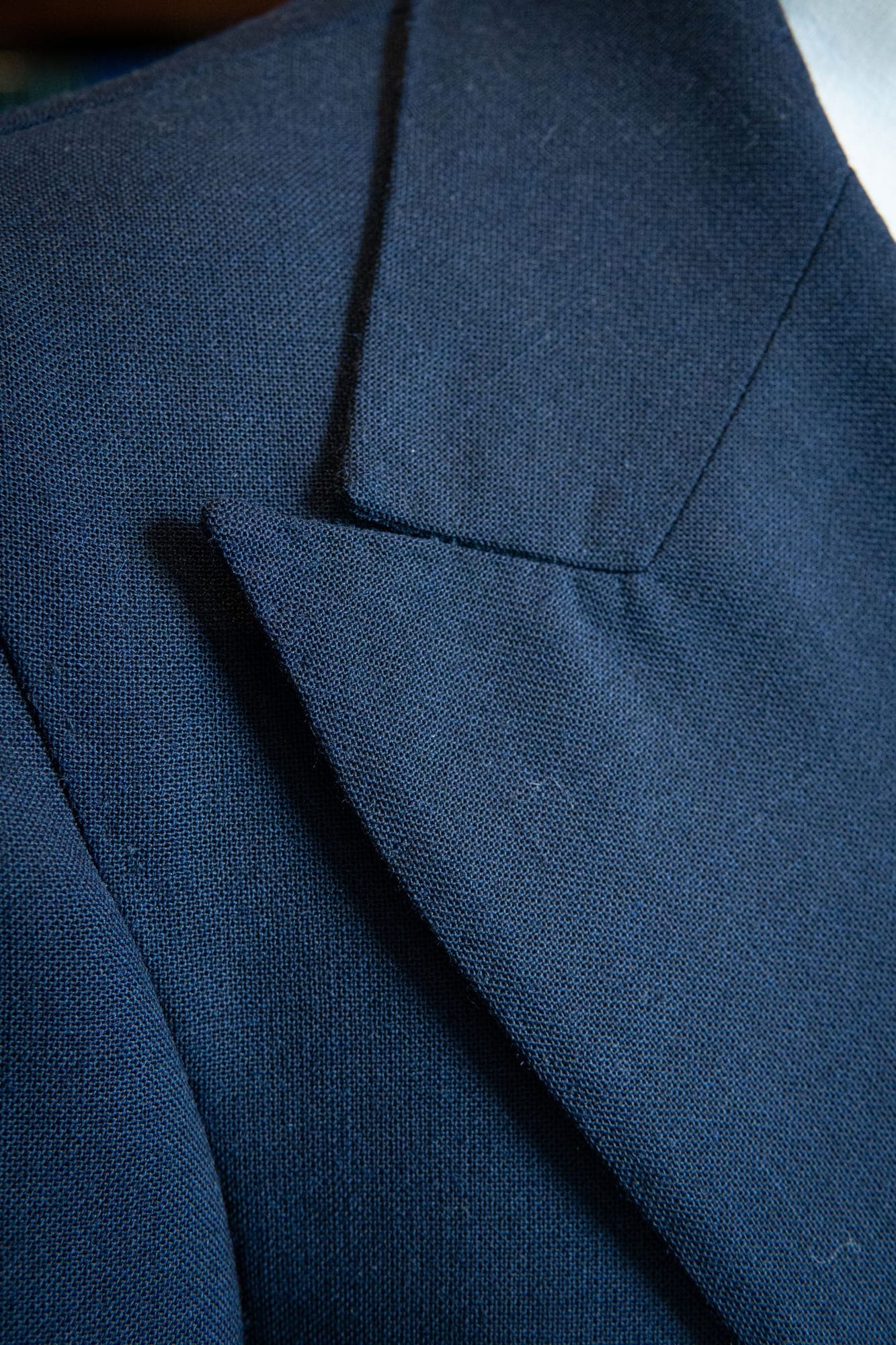
There is something that few articles about tailoring mention with sufficient frequency: the best bespoke pieces get better with wear. Not worse — better. The floating canvas, hand-stitched in horsehair, needs the heat and movement of the body to begin moulding itself. The tropical wool fabric, in its Super 120s or Super 130s, acquires a progressive drape that only daily use can build. The unstructured Neapolitan shoulder settles into the real shoulder of the wearer with a precision that no atelier fitting can fully anticipate.
A bespoke piece stored away is a piece not fulfilling its vocation. It was thought through, measured, constructed and adjusted for a specific body in motion — not for a hanger.
São Paulo as argument
São Paulo is not an easy city in which to dress well. The heat discourages formalism. The cultural informality of the city has created, over recent decades, a kind of elegance by subtraction — the tendency to solve the problem by wearing less rather than by wearing better.
But São Paulo is also a city of intense rhythm, of unexpected encounters, of days that begin in a meeting and end at a dinner with no time for a change of clothes. And in that context, quality tailoring — especially when built with lightweight tropical fabrics and within a tradition that prioritises comfort over rigidity — offers something the casual alternative does not: constant presence without constant effort.
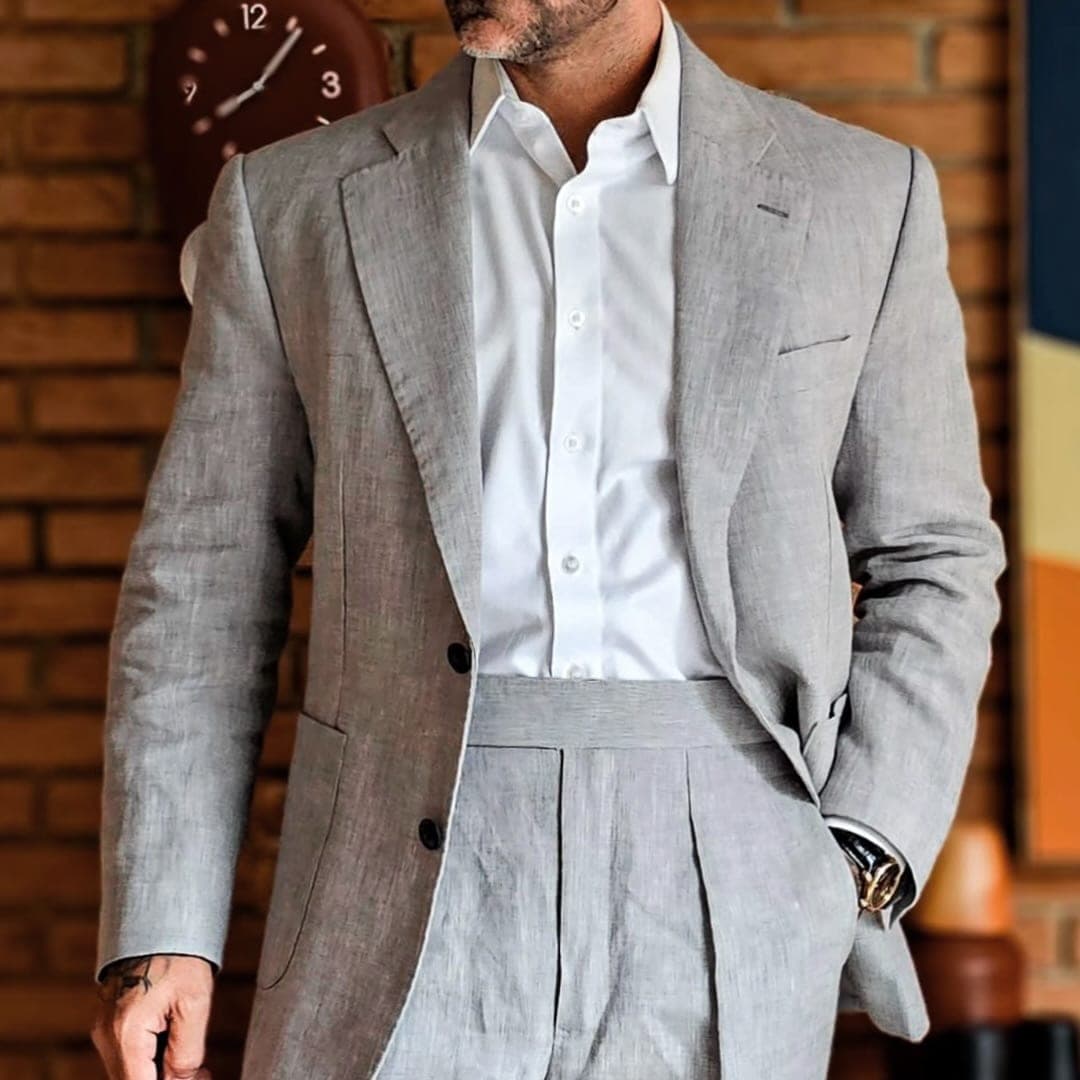
A tropical wool hopsack blazer with grey tailored trousers and an open-collar cotton shirt does what no streetwear combination can: it communicates that the man wearing it cares about the impression he makes, without appearing to have spent hours thinking about it. It is sprezzatura applied to the rhythm of Faria Lima.
The pieces that make this possible
There is an important distinction to be made between tailoring as uniform and tailoring as wardrobe. The complete suit — jacket and trousers in the same cloth — is a formal statement that indeed works best in specific contexts. But tailoring as an everyday wardrobe lives in separate pieces: the blazer that pairs with quality denim, the high-waisted trousers that transform a simple shirt, the waistcoat that adds a layer of intention to a combination that would be merely functional without it.
These separates have a freedom the complete suit does not possess. A Neapolitan tropical wool blazer can be worn with grey gabardine trousers on Monday, with well-cut jeans on Thursday, and with white linen trousers at a weekend event. It does not need context — it creates context.
For those who live in São Paulo and move through meetings, working lunches and varied social occasions, building a wardrobe around tailored separates is, in the end, more efficient than any trend-based wardrobe. The pieces last longer, improve with time, and function in more situations than anything made for a specific context.
Tuesday as criterion
When I work with a new client, I often ask a question that seems simple but carries strategic weight: "For which day of the week do you want this piece to work?" The answer I am not looking for is "for my cousin's wedding" or "for important client meetings." The answer I am looking for is "for a normal Tuesday."
Tuesday is the most honest criterion. It has no glamour. It carries none of the pressure of a special event that would justify any effort. It is simply a day that needs to happen with some dignity — and if the clothing makes that more natural, then the clothing is fulfilling its most essential function.
A suit that only works at a brother's wedding is a suit made for an occasion. A suit that works on a Tuesday was made for a life.
What the piece does for the wearer
There is an effect that is rarely mentioned and that any man who wears tailoring regularly will recognise: a change in bearing. Not only the physical bearing, though that changes too — a shoulder that rests correctly, a waist that finds its natural position, a length that neither pulls nor rises. It is the inner bearing: the man who knows he is well dressed has a different confidence, a different presence, a different disposition toward the day.
This sounds like a sales argument. It is not. It is the psychology of dress, documented by researchers who call the phenomenon enclothed cognition — the way clothing influences the mental state of the person wearing it. Wearing a well-constructed piece is not vanity. It is preparation.
São Paulo has 35 degrees of daily adrenaline. Tuesday asks you to show up. Show up well dressed.
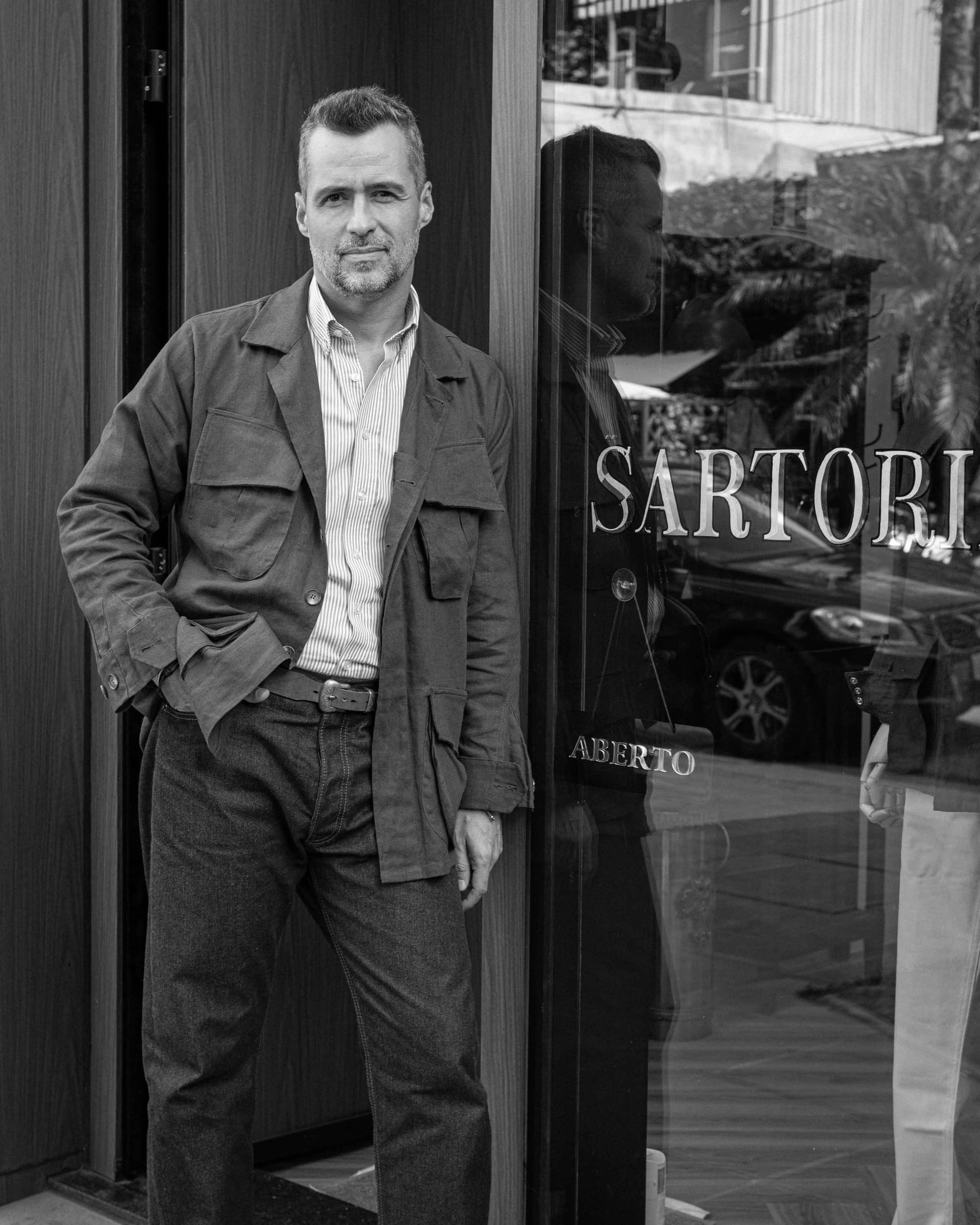
At the atelier, we work with clients who want pieces for the everyday — not only for special occasions. If that is the conversation you want to have, we are available for a first visit.
Share