The Neapolitan Shoulder: Why Less Is More
The unstructured shoulder is the signature of Neapolitan tailoring — and why a jacket can feel, at the same time, formally elegant and completely at ease.
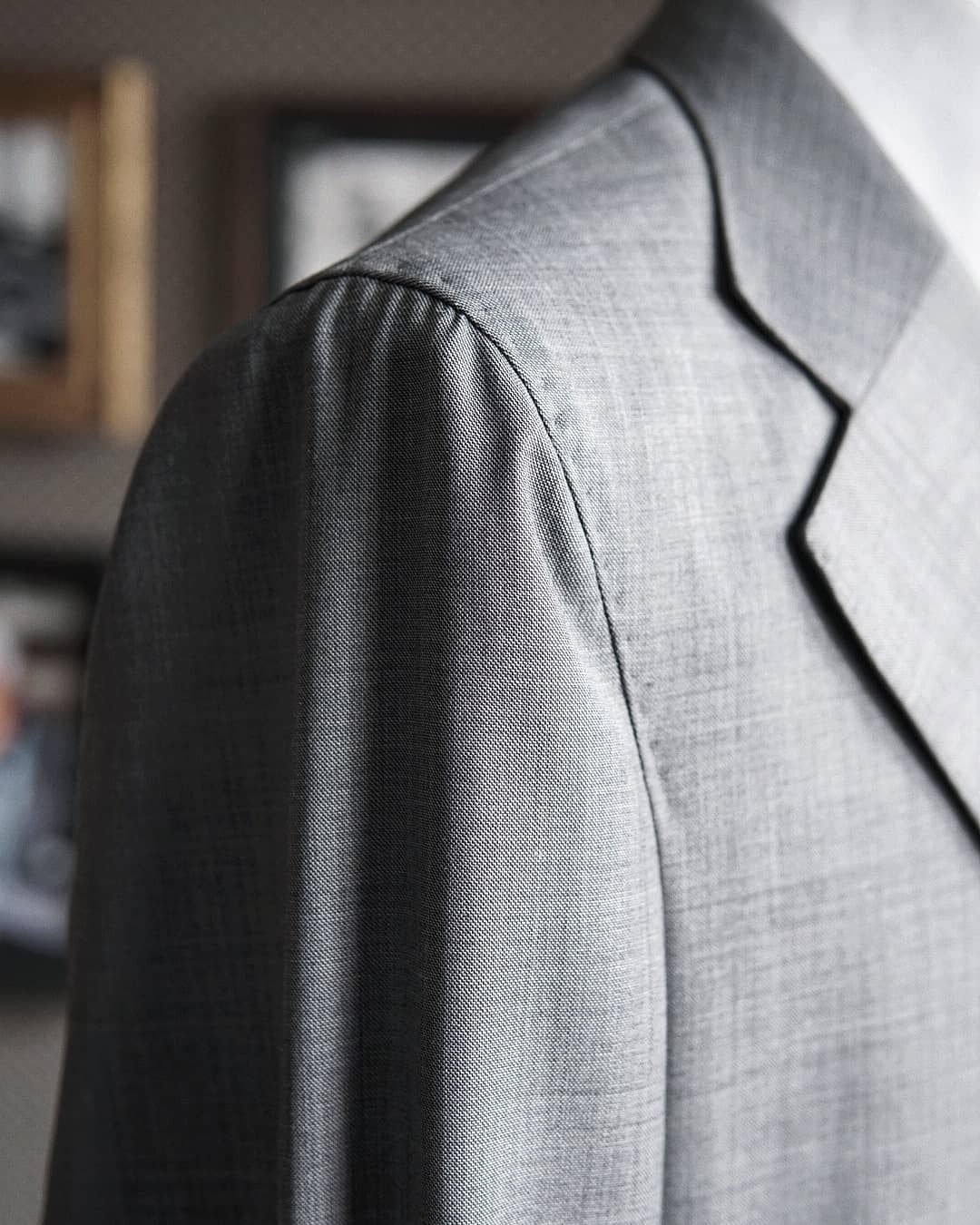
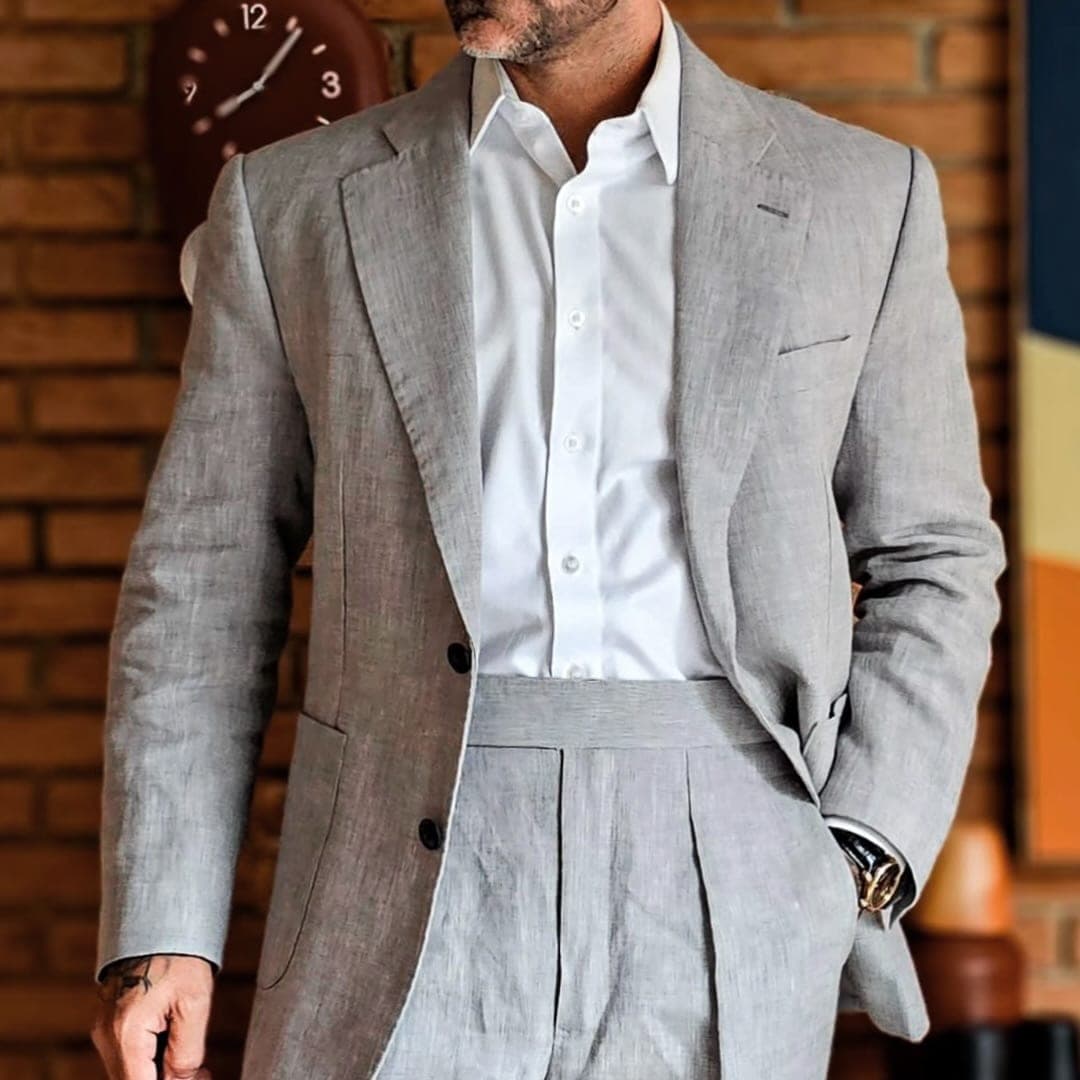
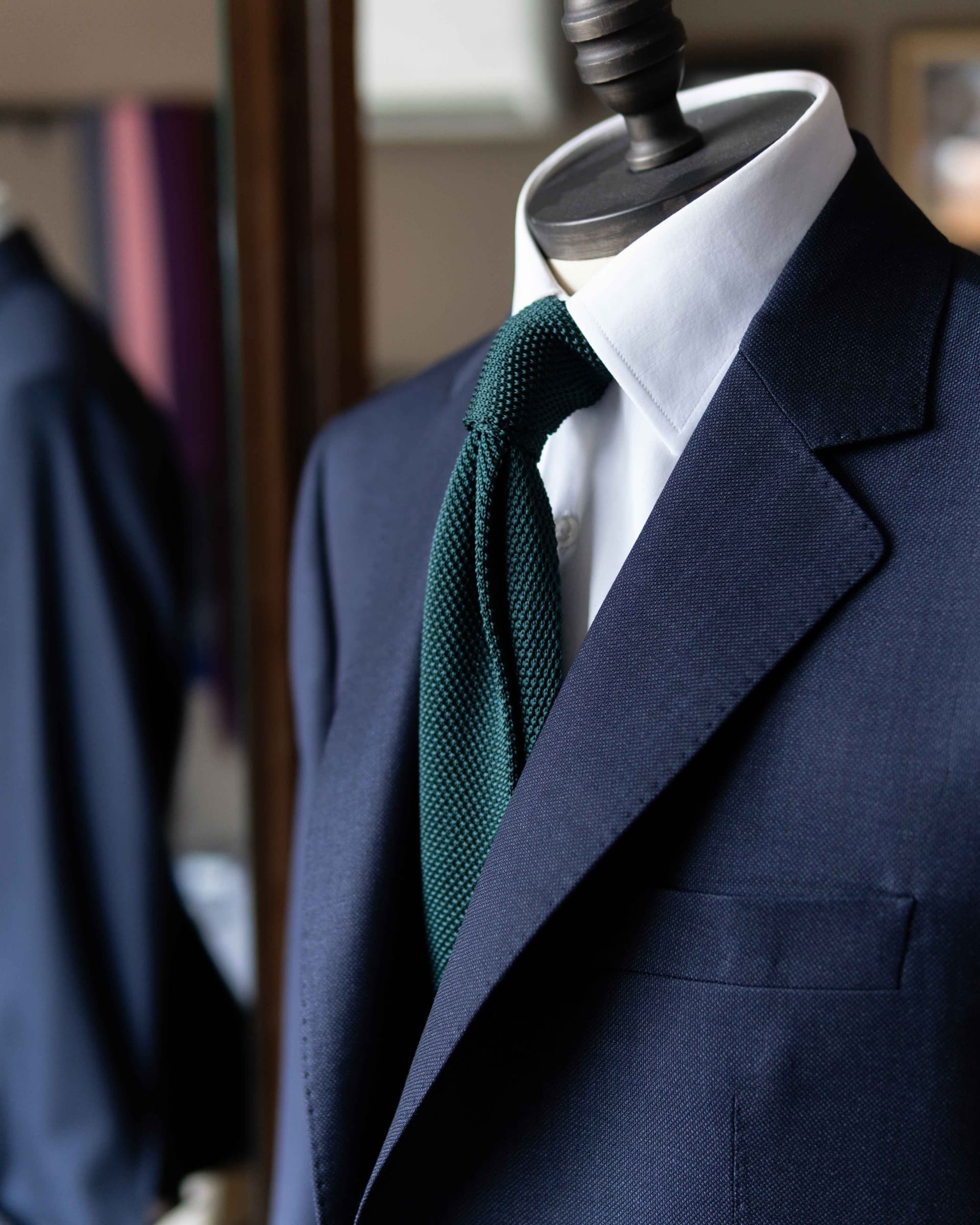
Of all the details that define Neapolitan tailoring, the shoulder is the most visible — and the most misunderstood. When someone tries on a Neapolitan jacket for the first time, the reaction is almost always the same: surprise at realising the shoulder simply is not there. No padding, no rigid structure. Just the cloth following the natural line of the body.
That initial strangeness is revealing. It tells us how thoroughly we have been conditioned to believe that a jacket needs structural presence at the shoulders — that the authority of a piece is measured by how much it defines and expands the silhouette. The Neapolitan tradition proposes the opposite: that true authority lies in ease, not in imposition.
To understand why this matters, one needs to understand where the choice came from.
Naples, the heat, and the shirt
Neapolitan tailoring was not born as an aesthetic rebellion. It was born as a climatic and cultural response to a specific city: Naples, with its 35-degree summers, its street culture, its sense of aristocratic informality that mixes princes and artisans in the same space.
In Naples, the shirt was always the dominant piece. The jacket — the giacca — came after, as an additional layer over it, not as armour to replace it. And it was from this relationship between shirt and jacket that the Neapolitan shoulder was born: the idea of attaching the sleeve to the shoulder the same way a shirt sleeve attaches to a body — lightly, with a slightly gathered seam that indicates presence without proclaiming it.
The technical term is spalla camicia — literally "shirt shoulder." But the translation misses the essential point: what this construction proposes is a philosophy of the relationship between clothing and body. The jacket submits. The man's shoulder remains his own.
The technique the machine cannot replicate
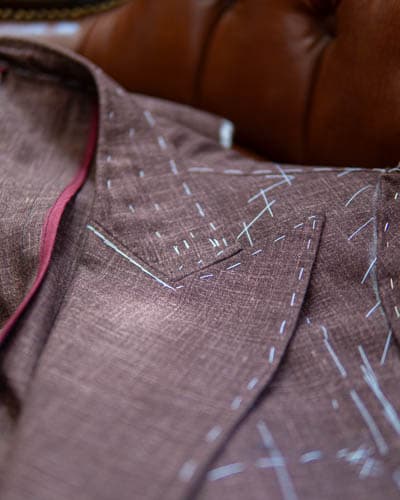
The spalla camicia demands of the tailor a skill that has no shortcut. The seam joining sleeve to shoulder must distribute, uniformly along its entire length, a calculated excess of cloth — a fullness that, once distributed, creates that gathering as discreet as it is deliberate.
Every millimetre of this distribution is done by hand. The reason is simple: no machine can feel the cloth in the way necessary to distribute the ease with the naturalness the eye demands. A mechanically gathered seam appears irregular; done by hand, it integrates with the shoulder as though it had always been there.
It is one of the most labour-intensive constructions in tailoring — and one of the least visible. Someone who does not know what they are looking at may wear a spalla camicia jacket for years without ever noticing the detail. But they will feel it. The Neapolitan shoulder does not announce itself to the eye; it presents itself to the body.
Three traditions, three philosophies
To understand what the Neapolitan shoulder proposes, it helps to place it in context with the other great shoulder constructions that Western tailoring has developed over the centuries.
The English shoulder — the Savile Row tradition — is the philosophical opposite of the Neapolitan. Structured, with firm padding and a straight line that defines and expands the silhouette, it communicates authority and formality. The English jacket does not submit to the body; it frames it. It is a choice that carries dignity, but also a certain rigidity — both physical and expressive.
The Milanese shoulder occupies intermediate territory. Lightly padded, with a clean line and a structure that is present but not dominant, it finds the balance between British precision and Neapolitan freedom. It is the choice of those who want formal presence without hardness.
None of these styles is objectively superior. Each reflects a different vision of what a man wishes to communicate when he puts on a jacket. The Neapolitan tradition we practise at the atelier begins from a specific premise: the jacket should submit to the body, not the other way around.
The effect in daily life — and over time
The difference between wearing a Neapolitan jacket and a structured one is not merely aesthetic. It is proprioceptive. The unstructured shoulder allows the arm to move with complete freedom, without the resistance that padding creates at the junction of sleeve and shoulder. Gestures that in a conventional jacket pull, bunch and displace — reaching upward, crossing the arms, gesturing naturally — happen in the Neapolitan without the piece resisting.
For those accustomed to structured shoulders, the transition can feel strange in the first hours. The jacket seems excessively relaxed, almost informal. But that is conditioning speaking — the expectation that a jacket must impose itself on the body to be respectable.
With wear, one notices the opposite: a jacket that accompanies the body without resistance paradoxically appears more present. It comes to be noticed for its drape, its fluidity, the way the lapel rests and the sleeve falls — not for the structure that proclaims itself. Neapolitan elegance persuades; it does not impose.
In the long term, there is another benefit. The unstructured shoulder is more durable. Without padding that compresses and deteriorates over time, the construction maintains its integrity for decades. A well-cared-for Neapolitan jacket not only lasts longer — it gradually accommodates itself to the body, becoming, over the years, ever more inevitably one's own.
What the shoulder reveals
Mariano Rubinacci used to say that Neapolitan tailoring does not hide the natural form of the body — it reveals it. The Neapolitan shoulder is perhaps the most direct expression of that philosophy: by removing the padding, by refusing the structure, the jacket simply appears where the man's shoulder is.
The result is a piece that seems, at the same time, very considered and completely unworried. It is sprezzatura woven into shoulder form: the art of appearing natural that requires, paradoxically, a technical mastery that few tailors possess.
At Sartoria San Paolo, this shoulder can be your signature. Not out of passive tradition, but out of conviction: we believe that clothing serves a man best when it knows its place.
The best way to understand the Neapolitan shoulder is, invariably, to wear one. If you have never experienced this construction, a visit to the atelier resolves what words can only approximate.
Share